Ask a dozen home baristas what ratio they pull and you will get a dozen confident answers, usually followed by an apology about the last shot. That is the strange thing about espresso: the numbers matter, but they are only useful when you know what they are supposed to taste like. A ratio is not a rule to obey. It is a lever you can pull when the cup in front of you is too sharp, too ashy, or simply flat.
This guide covers the three ratios you will see most often, what each one tends to do to flavour and texture, and how to taste your way toward the one you actually enjoy drinking.
What a Brew Ratio Really Measures
An espresso ratio compares the weight of dry coffee in the basket to the weight of liquid espresso in the cup. It is written dose first, yield second. A 1:2 ratio with an 18-gram dose means you stop the shot at 36 grams of espresso on the scale.
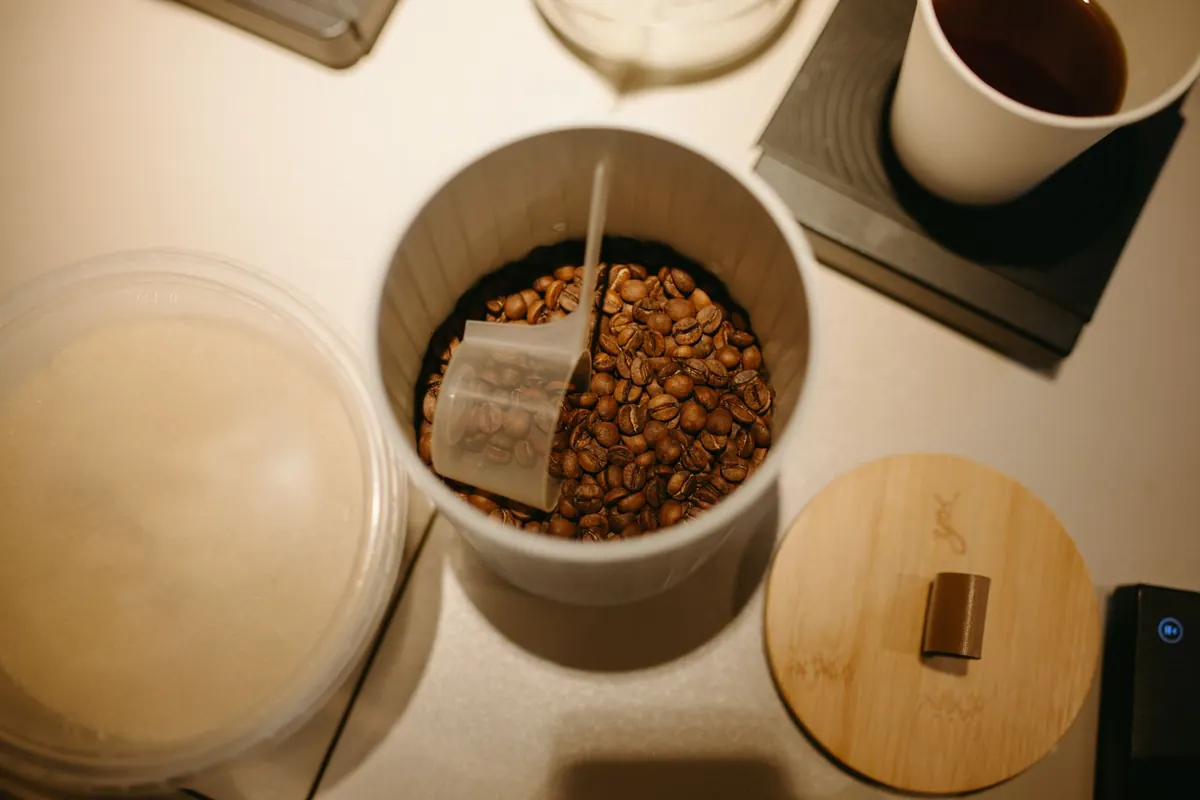
Weigh, do not guess. Crema is full of gas, so judging a shot by volume in a glass is unreliable at best, and plain misleading when a bean is very fresh. Put a small scale under the cup, tare it, and let the shot run until the number you want appears. This one habit will improve your consistency more than any new basket or tamper.
A ratio is not the same thing as a brew time. Time is a symptom, not a target. If your 1:2 shot tastes thin and sour at 22 seconds, grinding finer and running longer is usually the fix, and the ratio stays the same. That distinction saves a lot of confusion.
The Three Ratios at a Glance
Assuming a standard double basket holding roughly 18 grams, the familiar ratios land here:
- 1:1 ristretto — 18 g in, 18 g out. Short, dense, low bitterness.
- 1:2 espresso — 18 g in, 36 g out. The modern default, balanced and rounded.
- 1:3 lungo — 18 g in, 54 g out. Longer, more extracted, more bitter and more transparent about the bean's acidity.
These are starting points, not laws. A dark-roasted blend may sing at 1:1.5, while a light-roasted single origin might need 1:2.5 before the sweetness shows up. Your basket size, grinder, water and beans all nudge the numbers around.
1:1 — The Ristretto
Pull a shot at 1:1 and you get a small, heavy liquid with the texture of warm syrup. Less water has passed through the puck, so you have extracted less of the bitter compounds near the end of the run, and more of the sugars and acids that come out early. In the cup you will usually find brown sugar, dried fruit, chocolate, sometimes a dense caramel note. The finish is short and thick rather than long and drying.
The trade-off is that 1:1 can slide into sourness. If the shot tastes like lemon pith or feels thin despite its small size, you have pulled it short of full extraction. Ristretti work beautifully with milk, which is why they turn up in small milk drinks, and they can tame a harsh dark roast that turns ashy at a longer ratio. On a very light, floral coffee, though, a strict 1:1 often hides the flavours you paid for.
1:2 — The Everyday Default
If you have watched a barista in a good cafe and wondered what they were doing, it was probably this. A 1:2 shot is the reference point for modern espresso because it hits a workable balance: enough water to extract sweetness and roundness, not so much that bitterness takes over. Body is still substantial, and the finish lingers without scraping your tongue.
Taste cues for a well-pulled 1:2 are simple. The first sip is sweet, the middle is where the acidity or fruit sits, and the finish is clean and slightly drying in a pleasant way. If the cup tastes hollow in the middle, like the beginning and end are there but something is missing, you are usually undermixed or under-extracted rather than at the wrong ratio. If it is harsh and bitter all the way through, look at grind before you touch the ratio.
1:3 — The Lungo
Stretching the shot to 1:3 pushes more water through the same dose, which extracts more from the coffee. Bitterness and roast character rise, body thins, and the finish gets longer. On a medium-roasted bean with clean acidity, this can be lovely: tea-like clarity, distinct fruit, a dry but refreshing end.
On the wrong coffee, 1:3 tastes like burnt toast and paper. It is unforgiving of grind errors, because there is more water to pull out whatever is left in the puck. Note that a lungo is not an americano. An americano is a normal shot with hot water added afterwards; a lungo is one longer extraction, so the chemistry in the cup is different, not just the strength.
Because more water passes through the puck, a 1:3 shot also carries a little more caffeine than the same dose pulled short, though it is more dilute per sip. If you are sensitive to caffeine, keep an eye on the total, and ask a doctor if you are unsure how much suits you.
Reading the Cup and Making a Change
Tasting is a skill you build by paying attention to the boring shots as well as the good ones. Use these cues, and change one variable at a time so you know what caused the difference:
- Sharp, sour, salty, thin. Under-extracted. Grind finer, or extend the ratio slightly, for example 1:2 to 1:2.3.
- Bitter, drying, ashy, hollow. Over-extracted. Grind coarser, or shorten the ratio.
- Balanced but boring. Often a coffee problem, not a ratio problem. Try a different bean before rebuilding your technique.
- Great as espresso, harsh with milk. Try a shorter ratio for milk drinks and keep the longer one for straight shots.
Keep the dose fixed while you experiment. Changing dose and grind at the same time turns a simple adjustment into guesswork, and you will lose track of what worked.
A Simple Test to Find Your Ratio
Set aside an afternoon and one bag of coffee. Dose 18 grams into the basket three times, keep the grind identical, and pull one shot to 18 grams, one to 36, and one to 54. Write the brew time for each on a scrap of paper, then taste them side by side while they are still warm.
Most people discover something useful in that lineup: the ratio they assumed was "correct" is often not the one they enjoy most. You might find that your weekday blend is better short and syrupy, while a weekend single origin needs the longer pull. Both are legitimate. Espresso rewards curiosity far more than obedience, so taste, adjust, and keep notes on what you liked.
Photo: Jonathan Borba / Pexels