The bag promises apricot and brown sugar. The first cup delivers. A week later the same beans taste thin and slightly sharp, and you cannot point to anything you did differently — except that Monday's scoop was heaped and Thursday's was level. Coffee is unforgiving about small differences in quantity. A scale is the simplest way to remove that particular uncertainty, though it is not the only sensible way to make a good cup.
What a scale actually measures
A coffee scale does one job: it tells you how much coffee and water you are really using, in grams. Most models add a timer, which matters more than it sounds. Weight and time together tell you whether your grind is sitting in the right zone, and whether yesterday's good cup was skill or luck.
That is the whole trick. No scale makes coffee taste better on its own. What it does is make a good result repeatable, so that when a cup lands exactly right, you can build the same cup tomorrow morning without guessing.
Why grams beat scoops
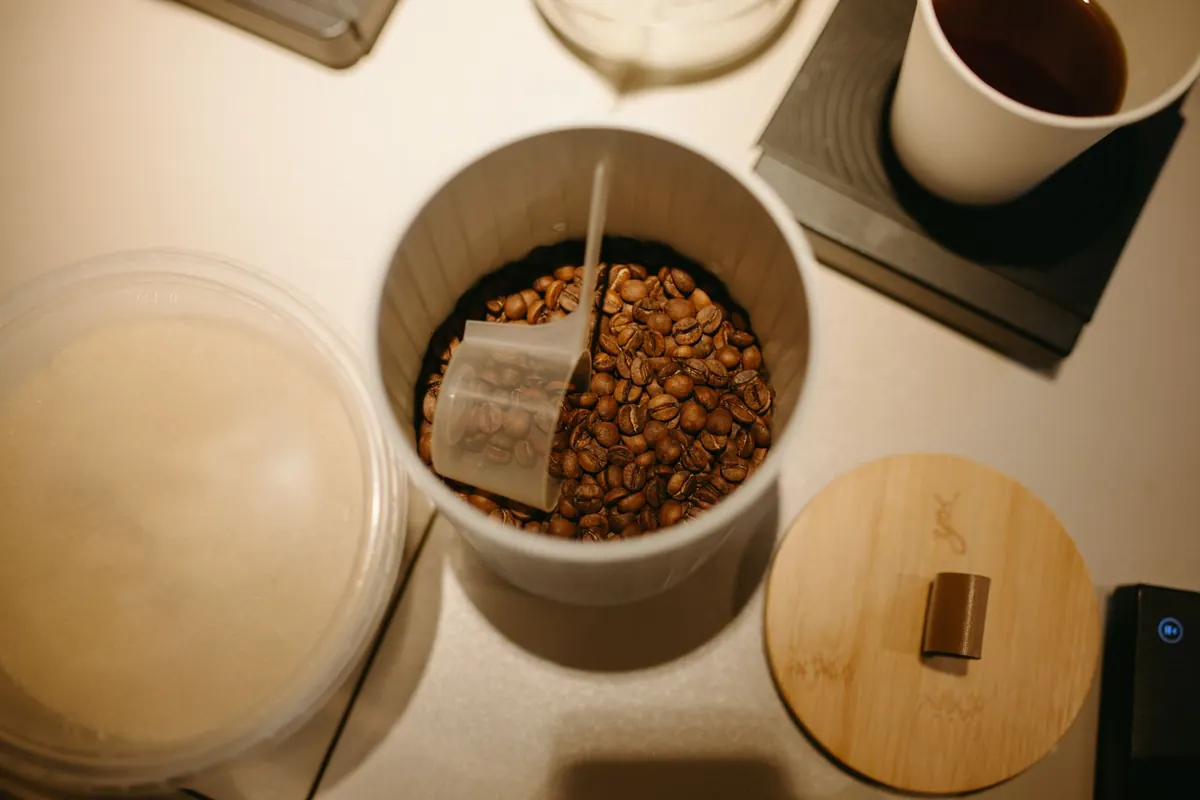
A tablespoon of coffee is not a fixed amount of coffee. Light roasts are denser than dark ones, so the same scoop holds more of one than the other. Freshly ground coffee settles and packs; a scoop taken from a full bag and a scoop taken from the bottom can differ by a couple of grams. In an 18-gram dose, two grams is roughly ten percent — enough to move a cup from sweet to sharp.
Grams do not have that problem. Eighteen grams is eighteen grams, whatever the bean, the roast or the grind.
The three numbers that decide how your coffee tastes
Dose, yield and ratio. Dose is the dry coffee you start with. Yield is the liquid you end up with. Ratio is the relationship between them, and it is the number worth remembering, because it travels with you from bag to bag.
A filter brew at roughly 1:16 — 20 grams of coffee to about 320 grams of water — is a reasonable starting point. Espresso is tighter, often near 1:2, so 18 grams in and around 36 grams out. Treat both as places to begin, not rules. Your beans and your grinder will push you one way or the other, and your taste decides where you stop.
The loop a scale makes possible looks like this:
- Weigh the whole beans before grinding. It keeps the grinder cleaner and stops you losing grounds to the counter.
- Put your cup or server on the scale and tare it to zero.
- Brew to a target weight rather than a target look. Stop when the numbers say stop.
- Note the time, roughly, and write down the dose, the yield and one word about the taste.
- Next brew, change one thing only — usually the grind — and see what moves.
Three lines in a notebook will teach you more about your own coffee than any general advice, because they describe your grinder, your water and your palate.
Where a scale earns its place quickly
Some brewing methods are almost impossible to control without one. Pour-over is the clearest case: the difference between 250 and 300 grams of water in the same dripper is a different drink, and eyeballing the water level in a cone is a poor substitute. Espresso is the second. Small changes in dose have a large effect on how a shot runs, and a scale is the only way to know what you changed.
Beyond those, a scale helps whenever you are learning something new:
- A new bag of beans. You need a reference point to dial in from, and the previous bag is usually it.
- Brewing for two. Doubling a recipe by feel rarely doubles cleanly.
- Immersion brews like French press and AeroPress. Less critical than pour-over, but a scale keeps the strength steady when you switch coffees.
- Cold brew concentrate. Big batches are expensive to get wrong, and a ratio makes dilution predictable.
- Anyone who has ever wondered why the coffee was better last Tuesday. That question is usually a measurement question.
When simpler measuring is enough
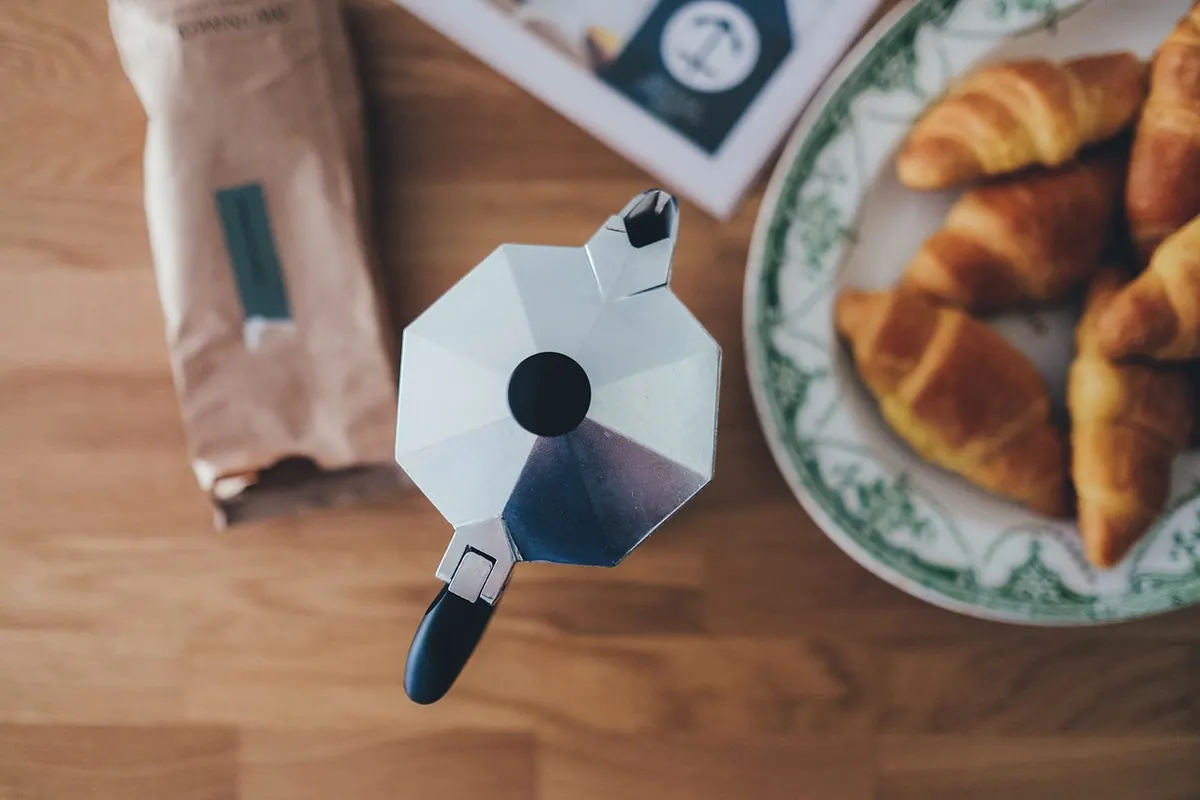
Plenty of good coffee gets made without a scale, and pretending otherwise is unhelpful. If you scoop pre-ground coffee into a drip machine, set it the night before and drink it with milk on the way out of the door, precision is not your bottleneck. Neither is it for a moka pot, where the basket is filled to the rim by design and the variables live elsewhere.
A few honest situations where you can skip it:
- You buy one bag at a time, finish it within a couple of weeks, and like what you get.
- You drink milk-based drinks where a small shift in strength disappears under steamed milk.
- You brew large batches in a machine that measures its own water, and you use the same scoop every time.
- You have tried weighing and genuinely cannot taste the difference. That is a real outcome, and it is fine.
There is a simple test. Borrow a scale for a week and weigh your usual dose each morning. Then go back to the scoop for a week. If the scoop version tastes the same to you, keep the scoop and spend the money on better beans. Better coffee in the bag beats better numbers on a display.
Choosing one without overspending
You do not need much. A modest kitchen scale with the right resolution will do the job for years. Look for these:
- 0.1-gram resolution. One-gram steps are too coarse for espresso doses.
- A capacity of around two kilograms. Enough for a server, a mug and water, with room to spare.
- A built-in timer if you brew espresso or pour-over. It saves reaching for your phone with wet hands.
- Fast tare and stable readings. A scale that drifts while you pour is worse than no scale.
- A footprint that fits under your dripper and a display you can read from above.
- Some water resistance. Coffee spills. It happens.
What you can skip
Bluetooth, apps, brew guides on the display and flow-rate graphs are pleasant extras, not requirements. Resist jeweller's scales with 0.01-gram resolution: their capacity is low, they respond slowly under a dripping kettle, and heat and steam upset them. A plain, well-made coffee scale is the better tool.
Habits that make the scale worth owning
The scale is only half of it. Keep it dry and away from the steam of a kettle, and wipe it after each brew so the buttons stay responsive. Weigh beans whole, then grind, so stray grounds do not end up on the platform. Tare between steps rather than doing mental subtraction with wet hands.
Most importantly, do not chase numbers past your own tongue. If a brew measures exactly as planned and tastes hollow, the measurement was never the problem — the grind or the beans were. Use the numbers to find the cup you like, then write those numbers down and stop fiddling.
Start with the coffee you drink most
Pick the method you make five days out of seven. Weigh the dose for a week and keep the scoop in the cupboard. If the cups get more consistent, add the yield to your notes; if nothing changes, you have learned something useful for the cost of a few minutes each morning.
And if the scale ends up idle on the shelf, it still weighs flour, oats and butter. Few coffee accessories can say that.
Photo: Myriams-Fotos / Pixabay