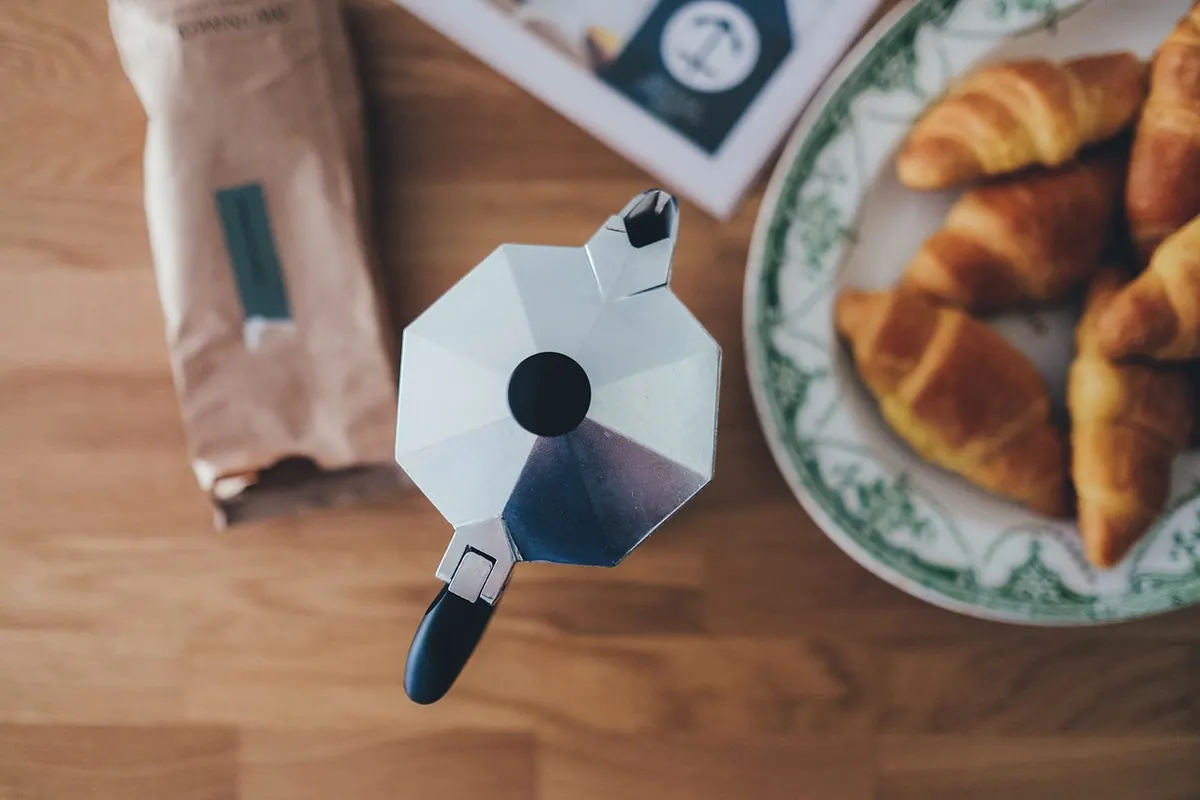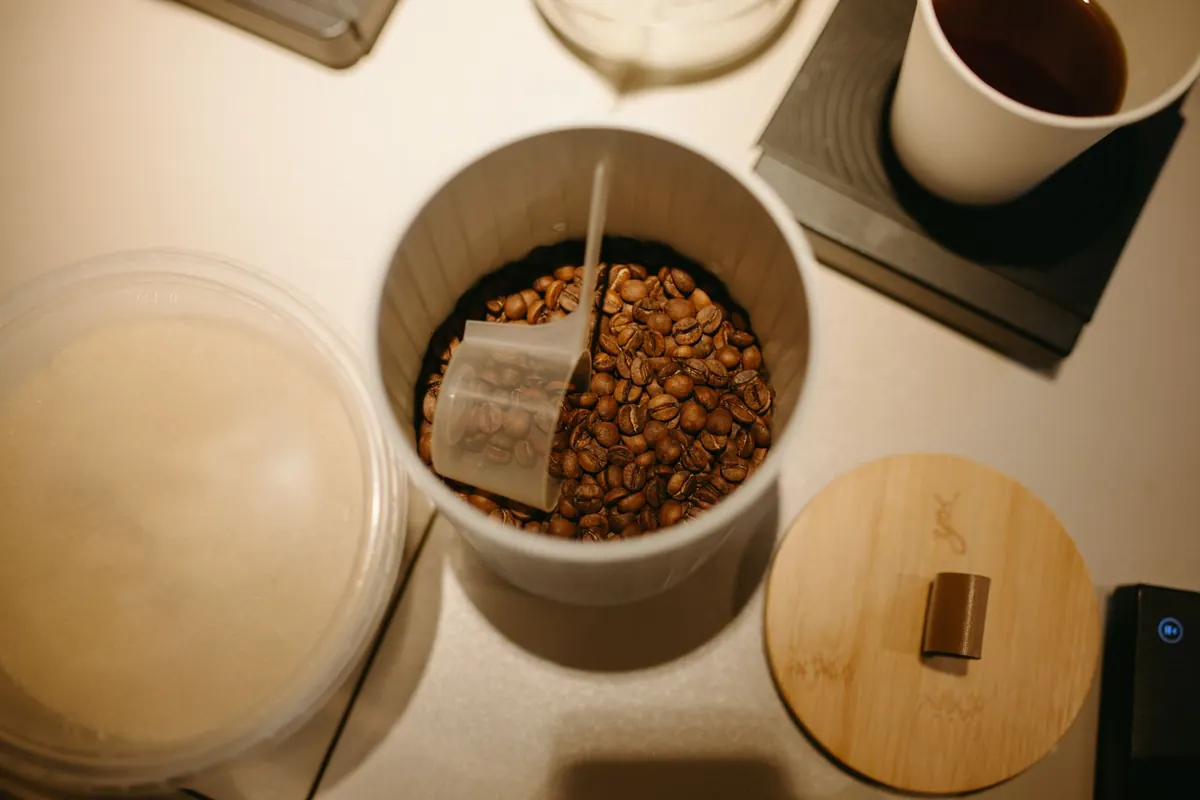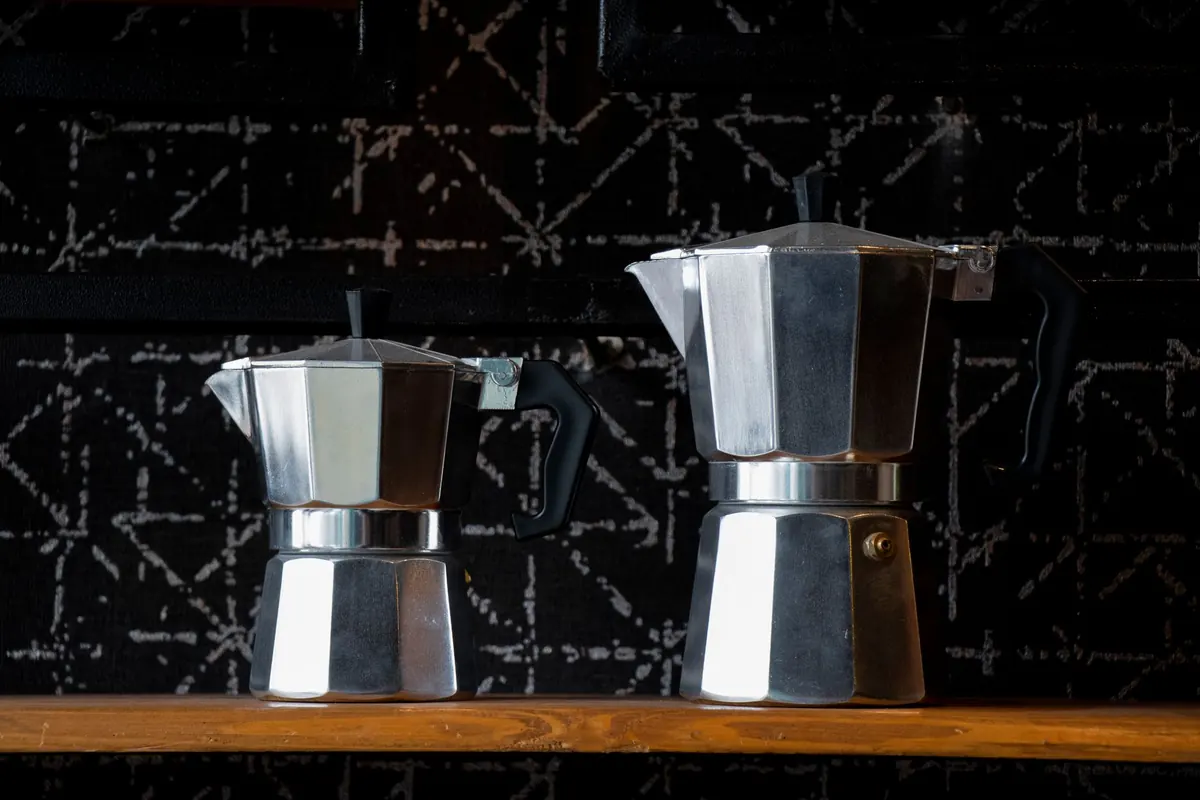
A moka pot and a home espresso machine both make a small, intense cup of coffee, and both look handsome on a kitchen shelf. That is roughly where the similarities end. One asks for five minutes and a steady hand on the heat; the other asks for counter space, a budget that stretches to a grinder, and a willingness to weigh beans before you are fully awake.
Choosing between them is less about which makes "better" coffee than about which one you will still be using in February, on a grey Tuesday, when you have eight minutes to get out the door. Here is what each machine actually demands of you.
For clarity: a moka pot is a stovetop brewer with a bottom chamber for water, a basket of ground coffee, and a top chamber that collects the finished brew. An espresso machine uses a pump to push water through a packed puck of coffee at around nine bars of pressure. They produce different drinks, and the moka pot does not produce espresso — a useful thing to know before you buy one expecting café crema.
How each one works, in plain terms
The moka pot is a clever piece of low technology. You fill the base with water to just below the safety valve, load the basket with a medium-fine grind, level it off without tamping, and screw the two halves together. On medium heat, steam builds in the base and pushes hot water up through the coffee. Pressure is modest, somewhere in the region of one to two bars, and the whole brew takes about four to five minutes from a cold start.
An espresso machine does in thirty seconds what the moka pot does in five minutes, but only after it is properly heated. Water is forced through a compressed puck at high pressure, producing a concentrated shot with a layer of crema. The machine is only half the equation: the grinder does at least as much work toward a good result, and a machine paired with pre-ground supermarket coffee will frustrate you.
Time: the honest timeline
A weekday morning with a moka pot
Fill the base with water you have already boiled in the kettle — this shortens the brew and reduces the chance of scorching the grounds. Load and level the coffee, assemble, set on medium heat, and listen. When the flow turns pale and starts to sputter, take it off the heat and run the base under cool water or wrap it in a damp cloth. Total active time is perhaps two minutes; total elapsed time, five to seven. You can grind beans while the water heats.
The same morning with an espresso machine
Machines with small boilers need ten to twenty minutes to reach stable temperature; some benefit from a longer warm-up. Then it is a minute or two of puck prep — weighing the dose, distributing, tamping — thirty seconds of extraction, and another thirty to sixty seconds if you steam milk. Cleaning the portafilter and wiping the steam wand adds a bit more. Realistically, ten to fifteen minutes from switching on to sitting down, and most of it is hands-on.
If your mornings involve children, commutes or an early train, the moka pot wins on time. If you work from home and enjoy the ritual, the espresso machine's extra minutes may be the best part of your day.
Cost: what you are really paying for
A moka pot is one of the cheapest serious coffee tools you can buy, and it lasts for decades if you look after it. The only recurring expense is a silicone or rubber gasket and occasionally the filter plate, both inexpensive and easy to replace when the pot starts leaking or the coffee tastes flat.
An espresso machine costs many times more for the entry-level models, and the machine is not the largest hidden cost. That is the grinder. A machine capable of a genuinely good shot needs a burr grinder designed for espresso, which can approach or exceed the price of the machine itself. Add a scale, a tamper if yours is flimsy, a milk pitcher, backflushing detergent and descaler, and the true entry price climbs.
Running costs differ less than you might expect, since both use the same beans. An espresso machine draws more electricity, and occasional servicing is worth budgeting for. A sensible note on money: if buying the machine comfortably means financing it or skipping the grinder, wait and buy the moka pot now. A modest setup used daily beats an aspirational one used twice.
Cleanup, care, and the small annoyances
The moka pot is easy but particular. Rinse the parts in warm water, use no soap on uncoated aluminium, and dry everything fully before reassembling so you do not trap moisture. Never put it in the dishwasher, and do not store it screwed shut. Once every week or two, scrub the basket and the inside of the top chamber with a soft brush.
An espresso machine asks for a routine you cannot skip:
- Flush the group head before and after each shot to clear old grounds.
- Knock out the puck, rinse the basket, and wipe the shower screen daily.
- Wipe the steam wand immediately after every use — dried milk is stubborn.
- Empty and rinse the drip tray before it smells.
- Backflush with detergent on the schedule in your manual, and descale with a product made for your machine.
None of this is difficult. All of it is daily. If you know yourself well enough to admit that a five-step routine will slide by week three, the moka pot is the kinder choice.
Taste: what ends up in the cup
The moka pot uses a fixed basket-to-boiler ratio, so strength is governed by the size of the pot and the fineness of your grind rather than by a recipe you dial in. The result is dense and syrupy, with a little sediment and a flavour profile tilted toward roast and cocoa rather than delicate fruit. There is no true crema, though a thin foam can appear if the pot is fresh off the heat. Expect something closer to a very strong filter coffee than a twenty-five-second espresso.
An espresso machine gives you control: dose, grind, ratio, temperature. You can taste a shot, decide it is sour or bitter, and change one variable to fix it. You also get real crema, texture, and the ability to steam milk properly. That control is both the appeal and the burden — a good grinder, fresh beans and consistent puck prep matter more than the badge on the machine.
What each does better
The moka pot makes a lovely, forgiving cup for drinking black or with a splash of hot milk, and it makes several cups at once without extra fuss. The espresso machine makes proper flat whites, cappuccinos and iced lattes, and it rewards a tinkerer. Neither is superior; they suit different drinks.
Which one fits your mornings
Match the gear to your habits rather than your ambitions:
- You drink one or two black coffees and want to be out the door: moka pot.
- You drink milky coffee daily and cannot imagine giving it up: espresso machine, with a steam wand.
- You like weighing, tasting and adjusting: espresso machine, and budget for the grinder first.
- You are brewing for three or four people at once: a larger moka pot does it in one pass; an espresso machine does it one shot at a time.
- You have a small kitchen or an induction hob: check that a moka pot is induction-compatible before ordering, and measure your counter before buying a machine.
- You dislike maintenance and fiddly cleaning: moka pot.
A low-risk way to decide
Start with the moka pot, a decent burr grinder and fresh beans, and give it a month of real mornings. Buy a small 3-cup pot if you drink alone; the 6-cup size is more versatile for two people. Learn to use hot water in the base, keep the heat moderate and take it off before the sputter becomes a gurgle. If, after a few weeks, you find yourself craving milk drinks and thick texture, that is an honest argument for a machine — and you will already own the grinder and know how to use it.
If you can, pull a few shots on a friend's setup before spending. And if you do buy a machine, put the grinder at the top of the budget rather than the bottom; it will outlast the machine and improve every cup you make. Whichever route you take, the goal is the same: gear that earns its place on the counter every single morning, not just the ones when you have time to spare.